Buying a used Jeep can be a smart move, but it requires careful checking. Many Jeeps live an active life—mud, rocks, towing, and winter roads can wear parts faster than normal commuting. Before you fall for the look, decide what you need and what you can fix.
- Think about your main use: daily driving, camping trips, or trail time
- Set a budget for small repairs (many buyers hold back 5–10% of the price)
- Expect to see higher mileage; 80,000–150,000 miles is common on used listings
A calm plan helps you spot problems early and keeps the deal from turning into stress later.
Pick the Model That Fits
“Jeep” covers very different vehicles, so match the model to your real life. A Wrangler and a Grand Cherokee can both wear a Jeep badge, yet they feel and behave differently. Learn the basics before you shop so you can compare fairly.
- Wrangler: body-on-frame, strong off-road design, often louder and firmer on-road
- Cherokee/Grand Cherokee: more comfort focus, often better road manners
- Gladiator: pickup bed utility, but check payload and towing needs
Then confirm the trim and drivetrain. Some are 4×4, some are 4×2, and the price gap can be large. Buying the right type first saves money later.
Check Frame, Floors, and Rust
Rust can turn a “good deal” into a costly project, especially in places that use road salt. On body-on-frame Jeeps, the frame matters as much as the engine. Bring a flashlight and look carefully, not just at shiny paint.
- Frame rails, control-arm mounts, and skid-plate areas for scaling or holes
- Floor pans and rocker panels for soft spots or patchwork repairs
- Tailgate and door bottoms for bubbling paint
After the bullet check, look for fresh undercoating that seems too new—it can hide damage. Frame repairs can run into four figures, and serious corrosion can be a safety issue, not a cosmetic one.
Test the 4×4 Hardware Properly.
A Jeep’s 4×4 system is a big reason people shop the brand, so it deserves a real test. On most models, you’ll see settings like 2H, 4H, and 4L on a lever or switch. Use the owner’s manual if the seller has it, and test on a safe surface.
- Shift into 4H at low speed on a loose surface and feel for smooth engagement.
- Stop, shift to neutral, then try 4L if the model allows it
- Listen for clunks, grinding, or warning lights during the change
After testing, drive a few minutes and check again for lights. Transfer-case and actuator repairs can be expensive, so a proper check is time well spent.
Look for Leaks and Hard Use
A clean Jeep can still hide leaks, so inspect underneath. Many owners add skid plates or guards, which is fine, but heavy scraping can hint at frequent trail hits. Fluids tell a story if you know what to look for.
- Engine oil: dark is normal, but milky oil can signal coolant mixing
- Coolant: should look clean, not rusty or oily
- Differential and transfer-case leaks: look for wet seams and drips on housings
After the bullet check, scan the underside for bent brackets, dented exhaust sections, or crushed pinch welds. Minor leaks may be manageable, but leaks plus heavy impacts often mean deeper wear. A dry driveway test spot after a drive is a simple extra check.
Confirm Engine Health on a Cold Start
Ask the seller not to warm the Jeep up before you arrive. A cold start reveals more than a warm engine because weak batteries, worn starters, and rough idle show up right away. Keep it simple: listen, watch, and verify with basic tools.
- Start-up should be quick; long cranking can point to fuel or ignition issues.
- Idle should settle smoothly within seconds, not hunt or shake
- Check for smoke: blue can mean oil burning, white, sweet-smelling smoke can mean coolant
After that, plug in a basic OBD-II scanner. Even a low-cost reader can show trouble codes and “readiness” status. Multiple “not ready” monitors may mean recent battery resets or code clearing.
Feel the Transmission and Driveline
A Jeep can feel tough while still hiding driveline problems. During the test drive, use a route that includes city speeds and highway speeds. Pay attention to shifting, vibration, and any clunk when you change from drive to reverse.
- Automatic: shifts should be smooth; harsh slams or delayed shifts are warning signs
- Manual: clutch should engage cleanly without slipping in higher gears
- Driveline: vibration around 55–70 mph can point to worn U-joints or a poor lift setup
After the bullet check, try a slow, tight turn in a parking lot and listen for clicking or binding. U-joint or driveshaft work can run a few hundred dollars, and repeated vibration can shorten the life of other parts.
Inspect Suspension, Tires, and Steering
Many used Jeeps have lifts, bigger tires, or wheel spacers. Modifications aren’t automatically bad, but they must be done correctly. Poor setup can cause tire wear, wandering steering, or the famous front-end shake some drivers report.
- Tire tread: legal minimum is often 2/32”, but safer wet grip is usually better above 4/32”
- Uneven wear can signal alignment issues or worn suspension joints
- Check shocks, bushings, and the track bar for play or cracks
After that, look at tire size versus gearing. Very large tires can strain acceleration and fuel use if the gears aren’t matched. As a rough idea, 35” tires often pair better with deeper axle gearing than stock. A short inspection here can prevent long-term headaches.
Verify Brakes, Lights, and Simple Electronics
Modern Jeeps rely on sensors for ABS and stability control, so warning lights matter. Don’t ignore a dash full of icons, even if the Jeep “drives fine.” Test the basics, because small electrical issues can waste a lot of time.
- Brake feel should be firm; pulsing can mean warped rotors or ABS activation.
- Test all lights: headlights, brake lights, turn signals, reverse lights
- Check windows, locks, wipers, HVAC fan speeds, and backup camera if equipped
After the bullet check, pop the hood and look at the battery age if it’s marked. Many batteries last about 3–5 years, depending on the climate. Weak voltage can trigger random faults that look bigger than they are.
Demand Records and Ask Direct Questions
Paperwork won’t replace an inspection, but it adds trust and can explain what you’re seeing. A used Jeep with records is easier to price because you’re not guessing. Ask questions that encourage clear answers, not vague stories.
- Request service receipts for oil changes, brakes, tires, and cooling system work
- Ask if it was used for towing or regular off-road trips
- Confirm any accidents, flood exposure, or rebuilt/salvage title history
After that, compare mileage to age. A 10-year-old Jeep with 120,000 miles averages about 12,000 miles per year, which is common. Finally, consider a pre-purchase inspection—paying for one can save far more than it costs.
Wrap Up with a Smart Final Check
A used Jeep can be a reliable partner if you buy with your eyes open. Focus on rust, 4×4 function, leaks, driveline feel, and the quality of any modifications. Keep the test drive long enough to reach highway speeds, then re-check for fresh drips and new warning lights.
- Bring a flashlight, a basic OBD-II scanner, and a notepad
- Don’t rush the 4×4 test or the underbody look
- Price the Jeep based on condition, not just the badge and tires
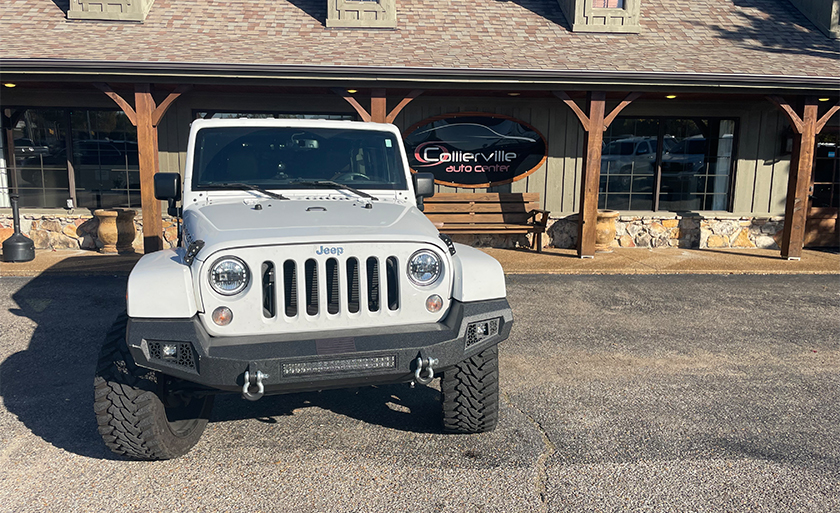
If you want a straight, hands-on buying experience with people who understand Jeeps, visit BDM LLC and Collierville Auto Center.